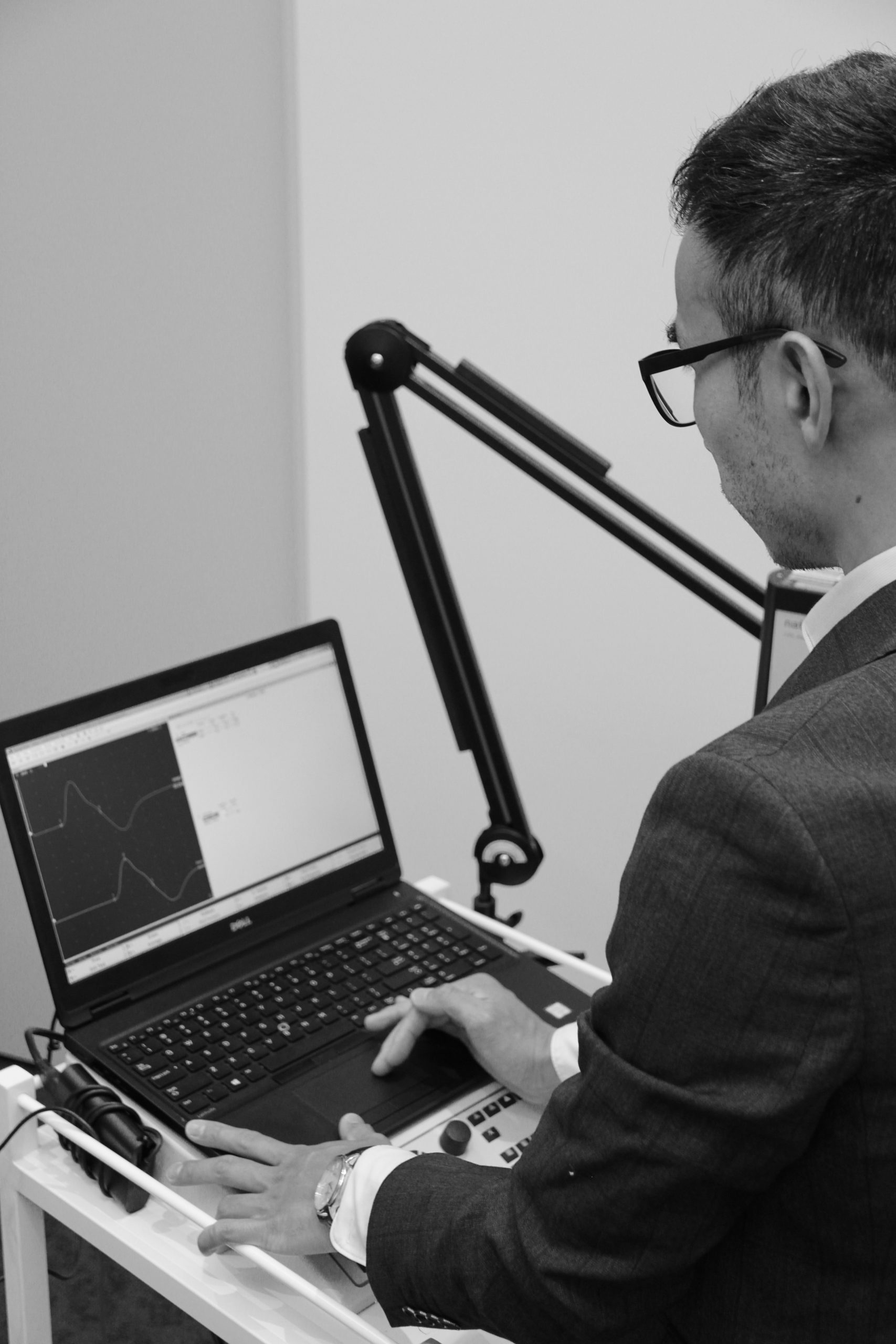
Nerve Conduction Studies Overview
Nerve conduction studies (NCS) are noninvasive diagnostic tests that measure the speed and strength of electrical signals travelling through peripheral nerves. By applying small electric shocks to the skin and recording the response, clinicians can identify nerve damage, demyelination, or compression (e.g. carpal tunnel syndrome).
Key Aspects of Nerve Conduction Studies:
- Purpose: The test determines how quickly an electrical impulse travels along a nerve, identifying if the nerve is healthy or damaged.
- Procedure: Surface electrodes are taped to the skin over specific nerves. A mild electrical impulse is delivered, and another electrode records the response (muscle contraction or nerve signal).
- Measurements: Key parameters include conduction velocity (speed), amplitude (strength of the signal), and distal latency (time taken for the signal to travel from stimulation point to the recording electrode).
- Sensation: The test may feel like a mild tingling or static, but is generally well tolerated
Resources